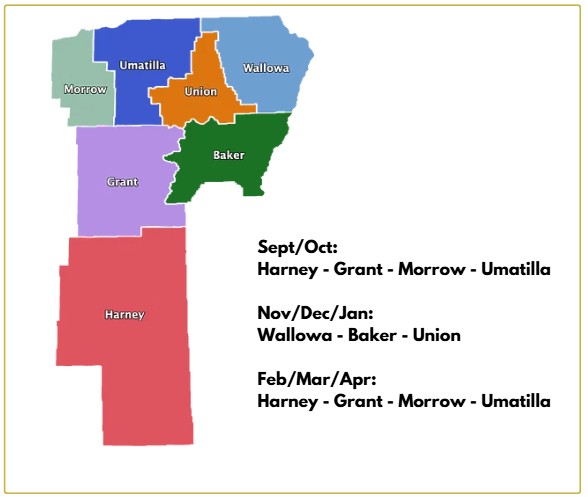
Image of "Lab Information" text above a white and blue "GO-STEM Mobile STEAM Unit" car and a blue and yellow van, both branded for the program; text below states the Mobile Maker Lab reaches 7 counties in Eastern Oregon, and counties are organized and allotted time by region.
A map of eastern Oregon, divided into colored counties, with lists of counties grouped by time periods; Sept/Oct: Harney, Grant; Nov/Dec/Jan: Wallowa, Baker, Union; Mar/Apr/May: Morrow, Umatilla.

In-School Labs provide pre-visit and post-visit activities to enhance student and teacher experiences.


Dark blue script "Questions:" on a white background.

Fill out the Mobile Maker Lab Program Interest Form (HERE) and a member of our team will contact you shortly.

Scroll down to see our lab options!


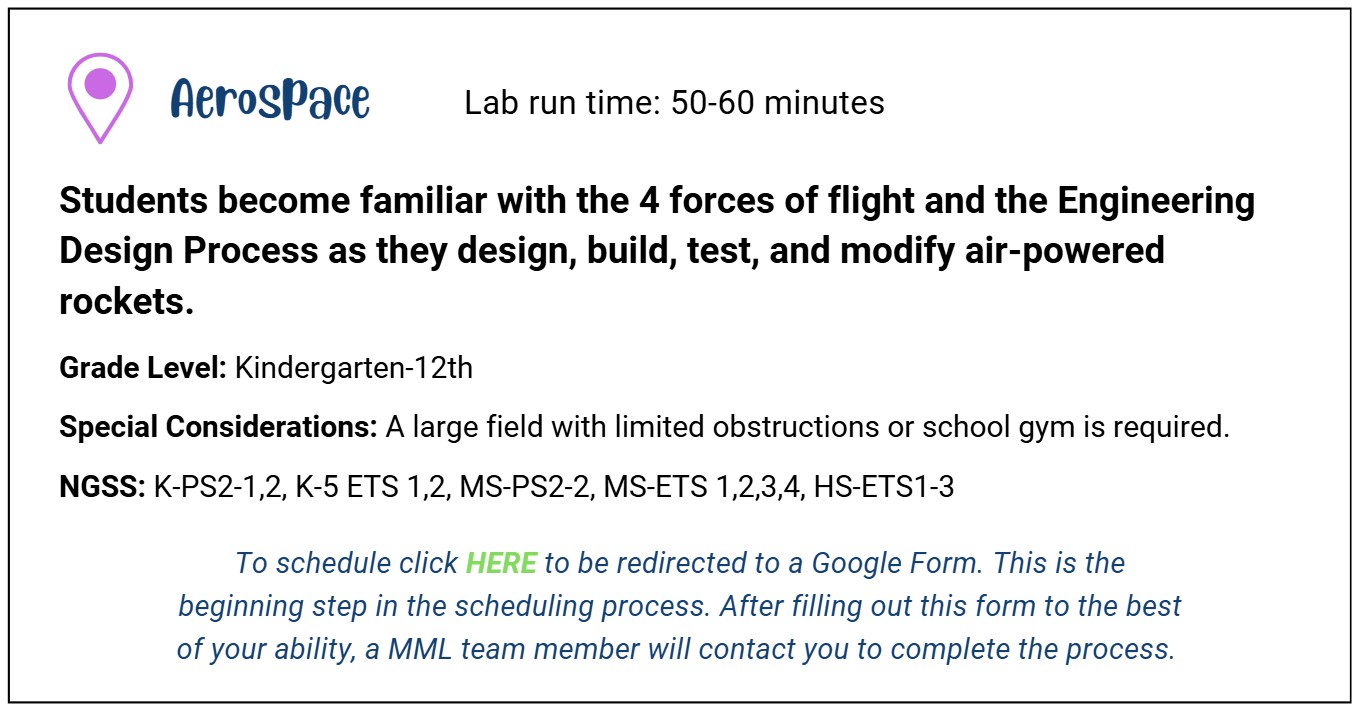
Aerospace lab activity description: Students in grades K-12 become familiar with forces of flight and the engineering design process through designing, building, testing, and modifying air-powered rockets; a large field or school gym is required.
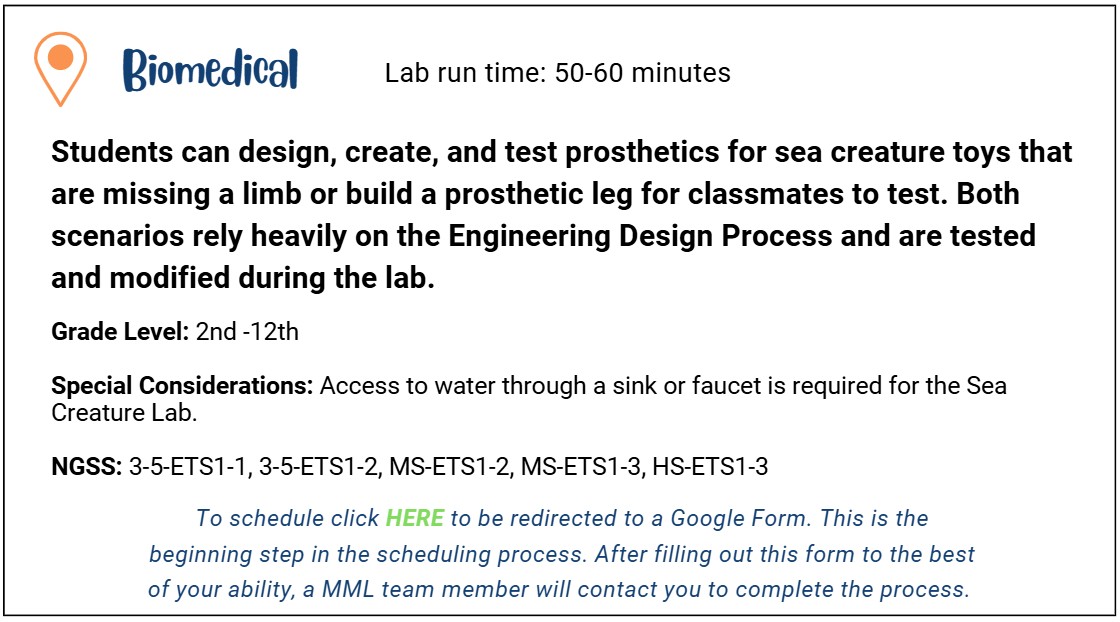
Biomedical lab description: Students design and test prosthetics for sea creature toys or build prosthetic legs for classmates, relying on the Engineering Design Process, suitable for grades 2-12; includes special consideration for water access and instructions to schedule through a Google Form.
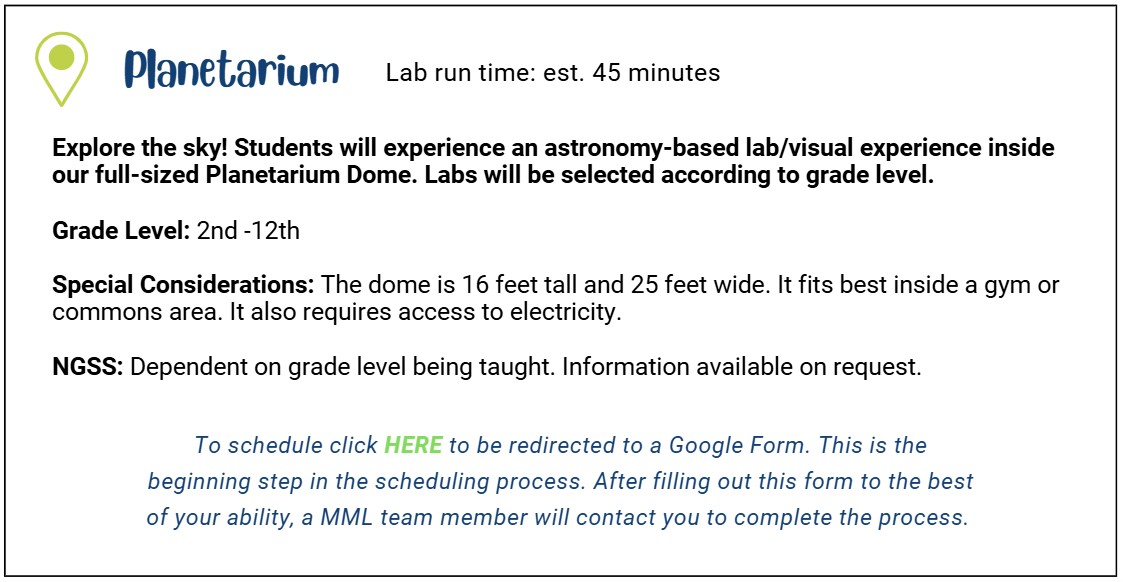
Promotional graphic for a planetarium program, including a logo and text. The program is for students in grades 2nd-12th, offering an astronomy-based experience inside a full-sized planetarium dome. The text provides details about lab run time, special considerations such as dome dimensions and electricity requirements, NGSS alignment information, and instructions to schedule the experience via a Google Form.
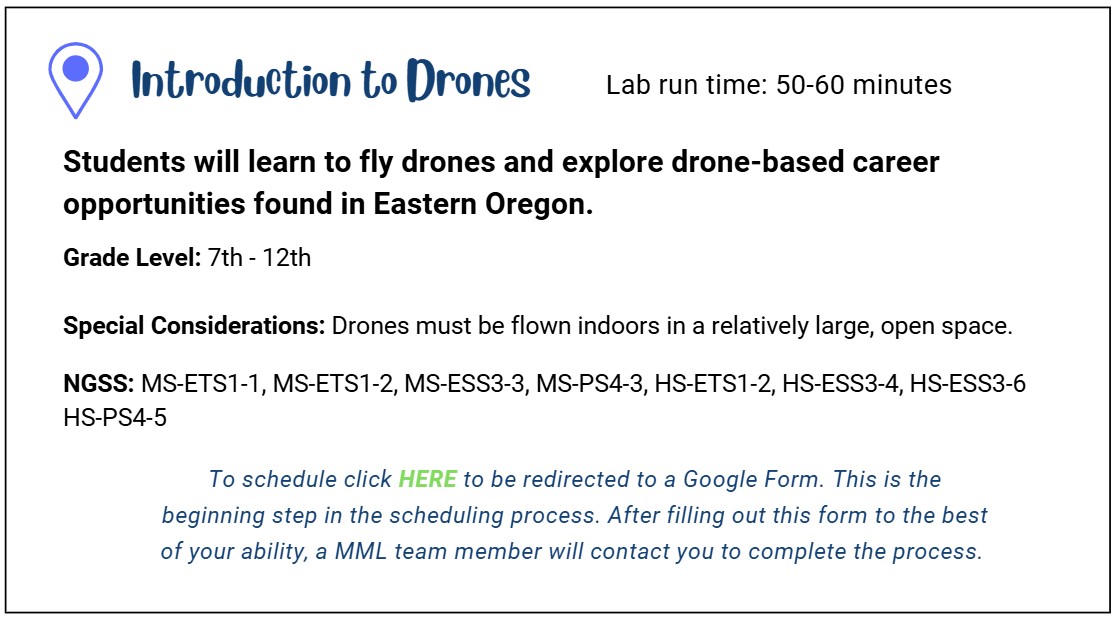
Advertisement for a drone education program, "Introduction to Drones," targeting students in grades 7-12. The lab is 50-60 minutes long, teaching students to fly drones and explore drone-based career opportunities in Eastern Oregon. Prerequisites are that drones must be flown indoors in a large, open space. Includes a link to schedule via a Google Form and lists NGSS standards.
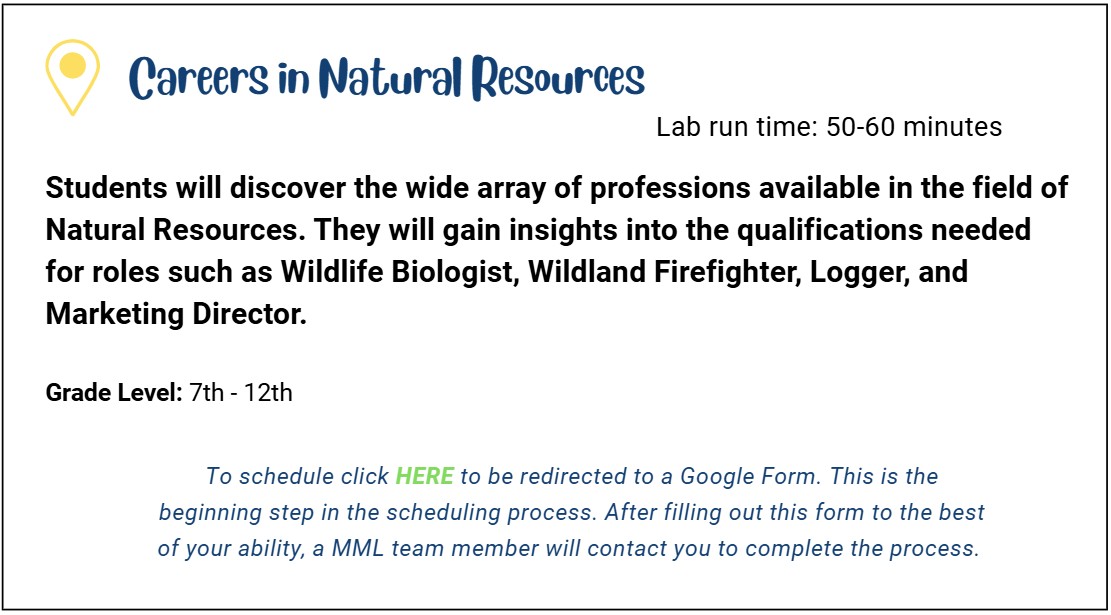
Informational graphic titled "Careers in Natural Resources" with a yellow location pin icon. Text describes a lab experience for grades 7-12 that introduces students to careers in the field of Natural Resources, including roles like Wildlife Biologist, Wildland Firefighter, Logger, and Marketing Director. The text also provides instructions on how to schedule, directing users to a Google Form.
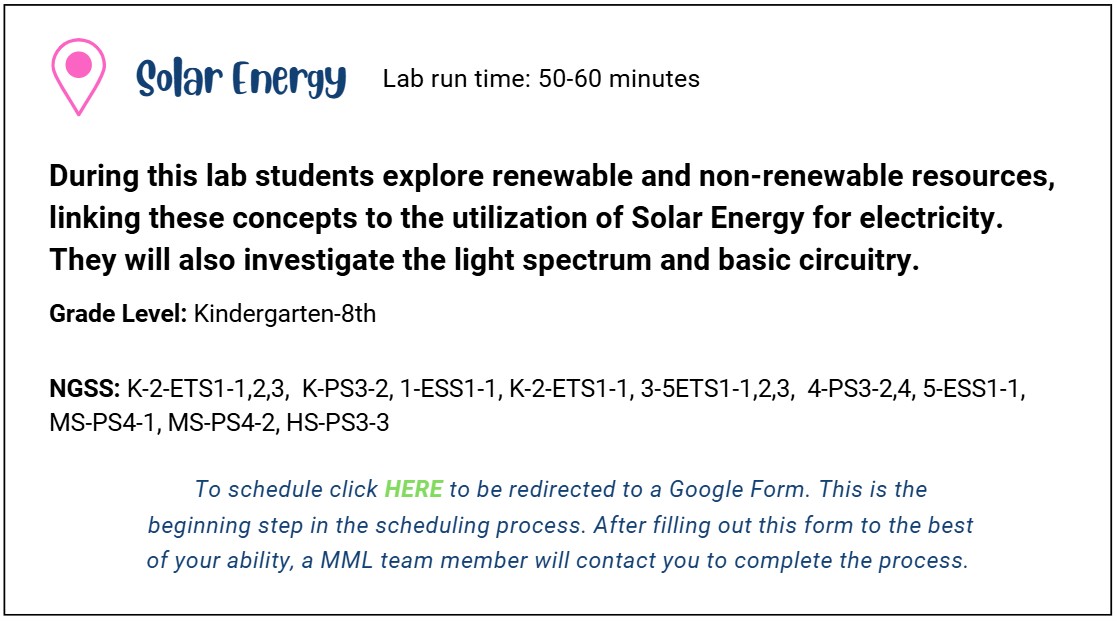
Information card for a "Solar Energy" lab for Kindergarten through 8th grade students, covering renewable and non-renewable resources, solar energy for electricity, light spectrum, and basic circuitry, with a link to a Google Form to schedule the lab.
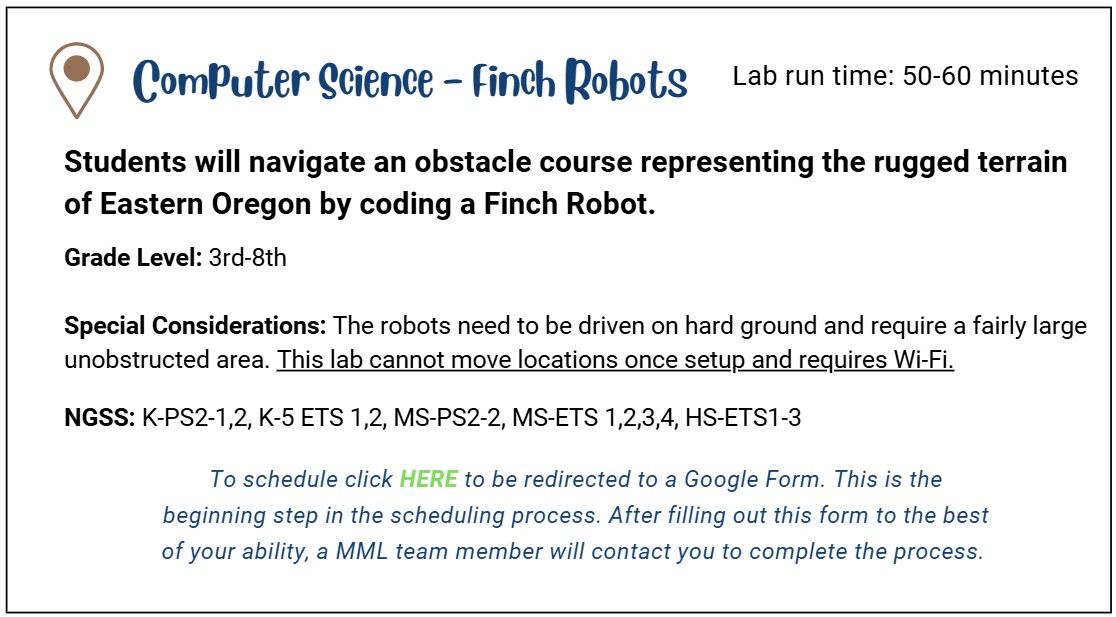
A text-based advertisement for a Finch Robot computer science lab for students in grades 3-8, where students code robots to navigate an obstacle course representing the terrain of Eastern Oregon. Includes lab run time, grade level, special considerations for the lab, and NGSS standards. Provides a link to schedule the lab session.
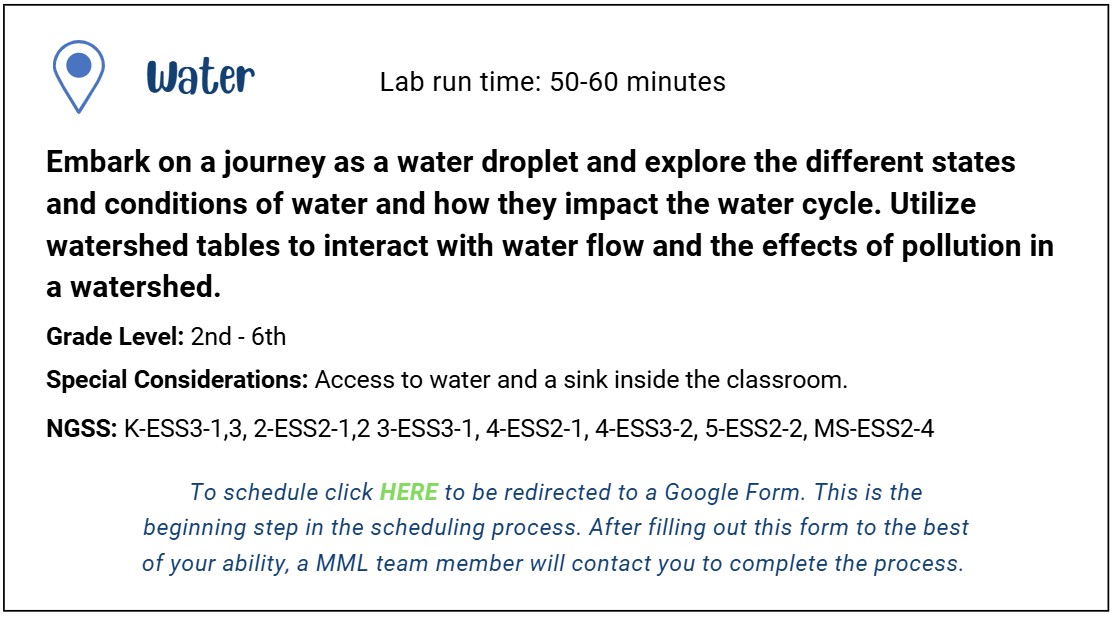
Informational graphic for a water-themed educational lab. Text explains the activity, where students explore water states, the water cycle, and pollution in a watershed using watershed tables. Targeted grade level is 2nd to 6th grade. Requires access to water and a sink. Includes a link to schedule the lab.
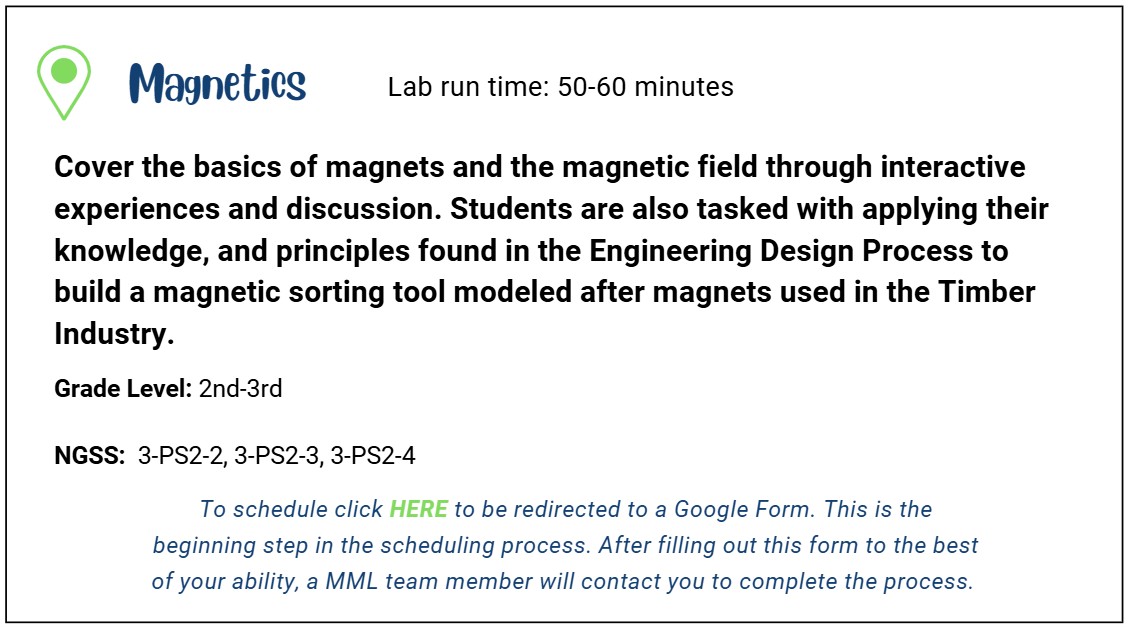
Text-based graphic promoting a "Magnetics" lab for 2nd-3rd graders, covering magnets and magnetic fields through interactive experiences, discussion, and the Engineering Design Process, with a focus on building a magnetic sorting tool. Includes lab run time, NGSS standards, and a link to schedule the lab.
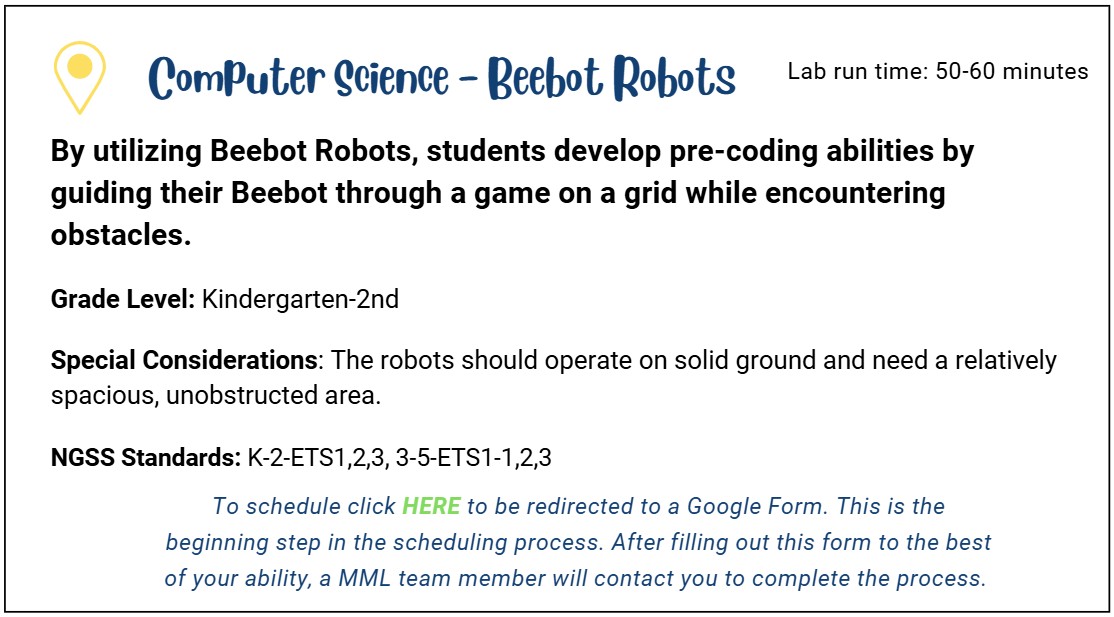
Promotional material for a computer science program using BeeBot robots for pre-coding skills in Kindergarten to 2nd grade, detailing the activity and scheduling instructions.
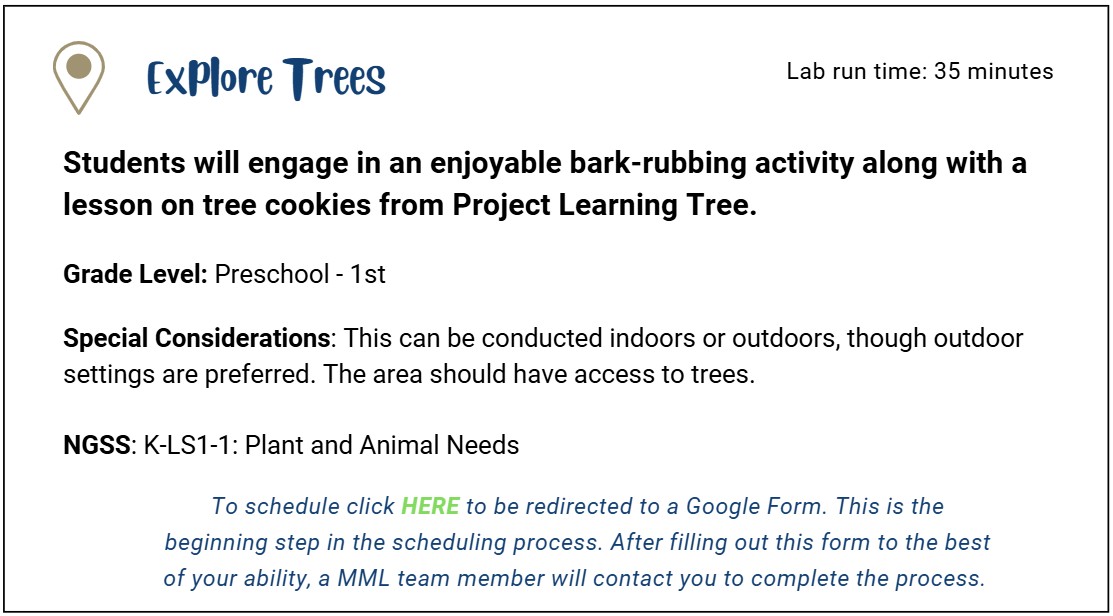
Promotional graphic for the "Explore Trees" activity from Project Learning Tree, geared towards preschool to first-grade students, involving a bark-rubbing activity and lesson on tree cookies; the graphic highlights details like the 35-minute lab run time, grade level, special considerations (indoors or outdoors), NGSS standards, and instructions to schedule via a Google Form.
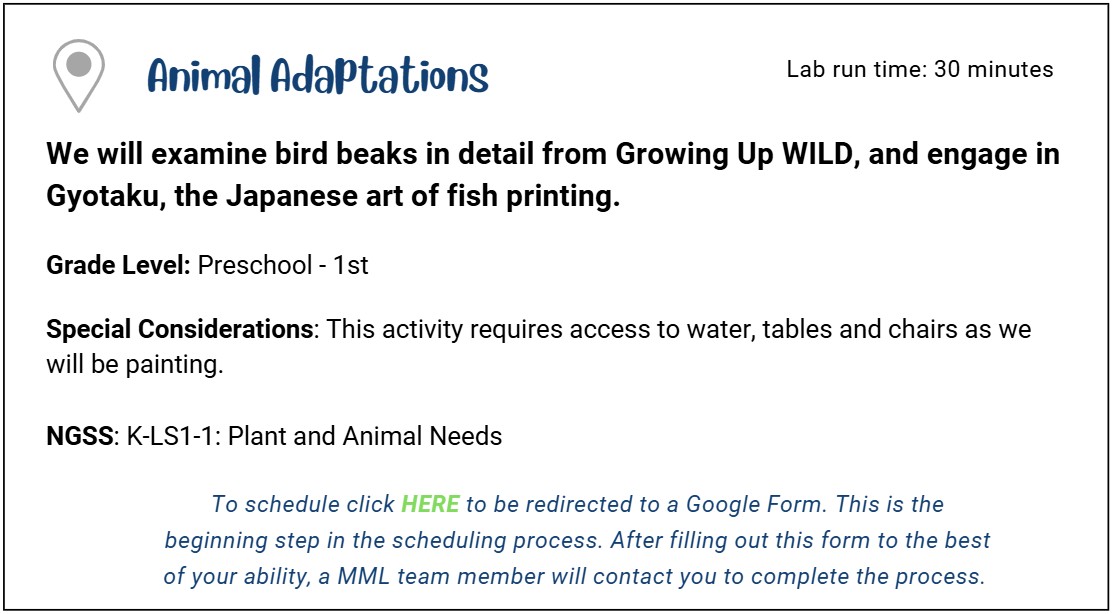
Image of a flyer titled "Animal Adaptations" outlining a lab activity. The activity examines bird beaks and uses the Japanese art of fish printing (Gyotaku). It is designed for preschool to 1st grade students, takes 30 minutes, and requires water, tables, and chairs. The flyer also includes a link to a Google Form for scheduling and states the activity aligns with NGSS K-LS1-1: Plant and Animal Needs.
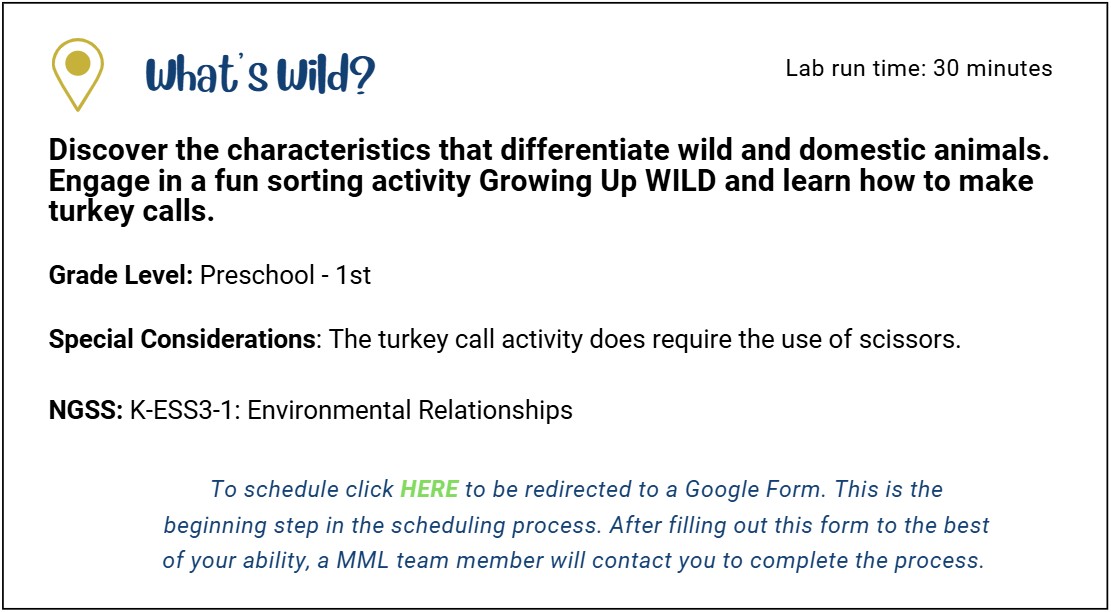
Image promoting a "What's Wild?" preschool to 1st grade activity about the differences between wild and domestic animals, including a sorting activity and turkey call making; includes time, grade level, special considerations, and scheduling information.
Image details for the educational program "See Like a Sat", describing a hands-on lab for 9th-12th grade students to explore satellite and drone imagery, computer vision, and model satellite building, needing internet and computer access, with scheduling information via email.
Promotional material for an educational program called "Predict the Pump," targeting 9th-12th grade students. The program involves analyzing real-time Hydromet data, exploring weather and water trends, using simple machine learning models, and coding. Students need internet and computer access. Contact information for scheduling is provided.